I spotted my first Spotted Lantern Fly (SLF) this summer in New Haven, walking down Edwards towards State. Although I recognized the pest from many advisories over the year, I was shocked when I went to squash it over its unexpected speed. No matter how quick, or sly, my maneuvers, the bright orange-backed insect managed to zip away at the last moment, mocking me.
Many have suffered the same toil, leading researchers and ecological activists to come up with better methods for tackling the invaders, which have been found in 17 eastern U.S. states and continue to spread. The SLF uses its long needle-like styletes to piece bark and suck sap from the inner bark of host trees, according to research by Michigan State University.
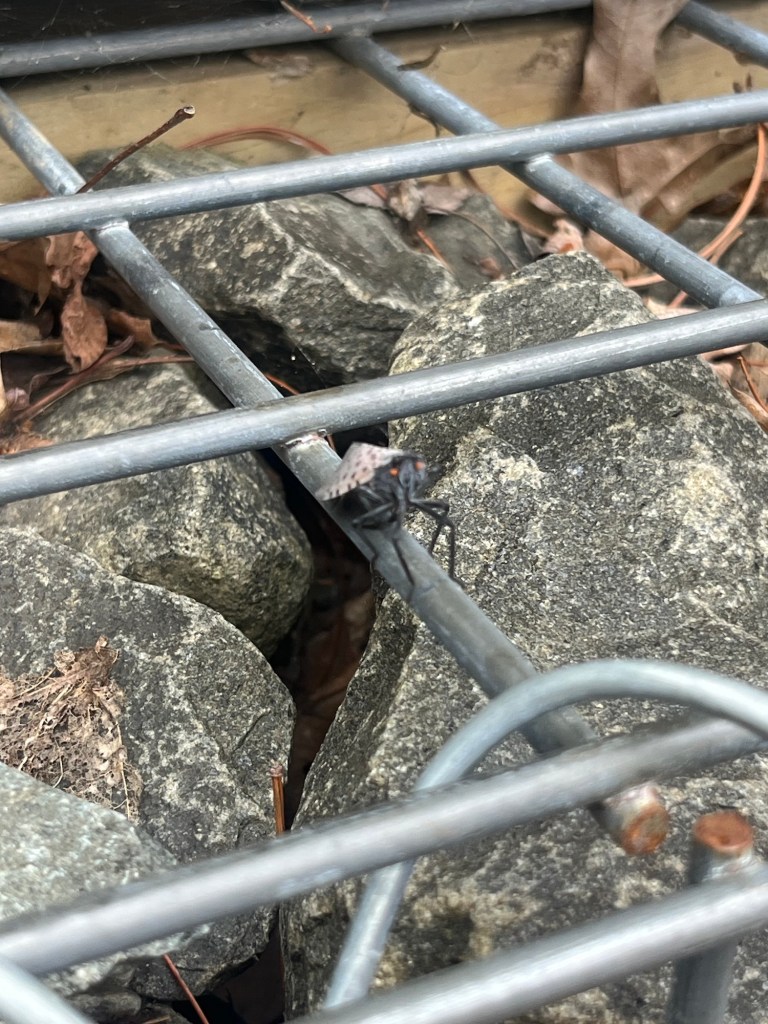
The invasive pests can feed on at least 70 species of trees and woody vines, but their most highly preferred and suitable meal is Tree of Heaven, another well known invasive species that has launched what I would call a full-bore assault on our native ecosystems.
SLF populations can reach high densities in residential and urban areas, as well as in orchards, vineyards and wooded areas, especially where Tree of Heaven is present, MSU says. As a result, locating and managing Tree of Heaven, or TOH, is a key aspect in dealing with Spotted Lantern Fly to reduce the impacts of the invader.
In Connecticut
The state of Connecticut has renewed an Order of Quarantine for SLF, originally established in 2021, as the distribution of the insect continues to expand, according to the Connecticut Agricultural Experiment Station. Detection is incredibly important, so if you suspect you have found a SLF, snap a picture of it, collect it if possible, and report here.
The nymphal stage of the insect takes place in the spring, with adults appearing in late summer. In the fall, adults about 1-inch long can often be found congregating on Tree of Heaven (Alianthus), willows and other trees. They will lay egg masses on trees and almost any nearby surface like rocks, decks, houses, outdoor equipment, furniture, etc, per CAES.
Nymphs of SLF will hatch from the eggs in the spring (late April-June). This insect attacks many hosts and has the potential to severely impact Connecticut’s farm crops, particularly apples, grapes, and hops, and several tree species. The secretion of excess sap called honeydew can also be a nuisance for residential infestations.
“We’ve had high numbers of nymphs, particularly in Fairfield and New Haven counties and now they’ve become adults, so they are much more visible,” Dr. Gale E. Ridge, an associate science at CAES, told WTNH. “The populations are very well established in the lower state counties. So, we are more interested in getting people from Tolland and Windham counties.”
Some good news is that in Pennsylvania, where SLF were first reported, the invasive pests’ population is decreasing.
“What has happened in Pennsylvania is going to happen here. Native predators, parasites and pathogens will figure out there’s a new food source and then bring these numbers down,” Dr. Ridge said.
Tree of Heaven
While the invasive species Tree of Heaven may help to locate and eradicate Spotted Lantern Flies, it also works to attract the species, in addition to a number of other factors that make the tree a massive pain in the back (pardon my French).
Right off the bat, the Tree of Heaven can also affect human health, being a very high pollen producer and moderate source of allergy in some people. Sometimes the plant can cause skin irritation or dermatitis through contact, with rare reports of myocarditis from exposure to the sap.
First introduced into the U.S. when young trees from England were planted in Pennsylvania in the late 1700s, the species has quickly spread the entire country due to its ability to tolerate drought and pollution and rapid growth. Even a one-year old tree able to produce seeds and mature seeds producing more than 350,000 seeds per year!! These seeds can be carried long distances by wind or water, with germination rates higher than most other trees.
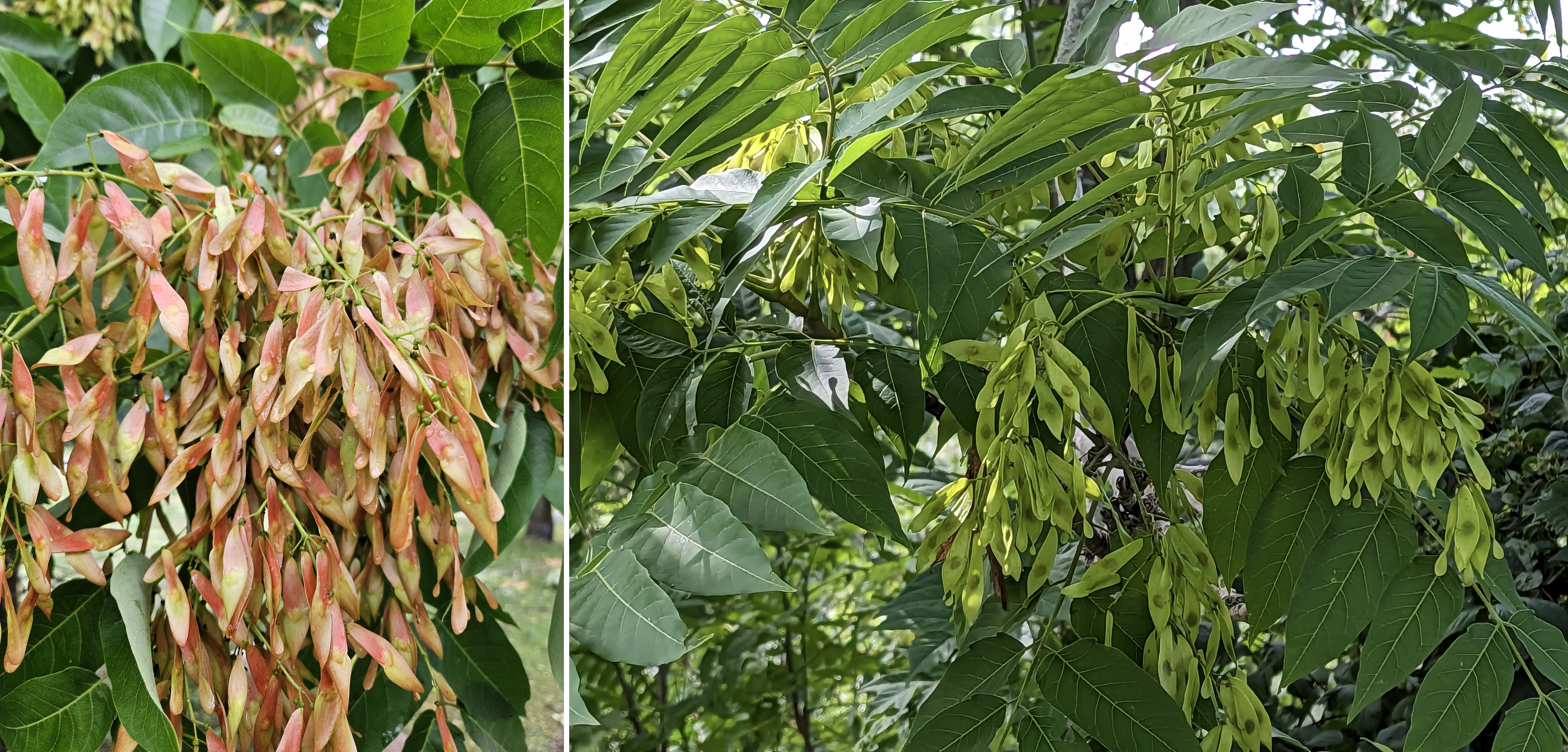
The tree is commonly found in disturbed areas, including alleys or railroad yards, along train tracks, highways and local roads. It is one of the fastest growing trees in North America, with bitter compounds in its leave also keeping deer, livestock and small rodents from feeding on ToH.
Like the aboveground portion of the tree, which may increase by 3 feet per year (thus the name), Tree of Heaven’s roots can grow rapidly and exploit cracks in the structure of building foundations and roads, according to MSU. Water-seeking roots can plug up sewer lines and invade wells, causing damage and giving drinking water an unpleasant taste.
Not to menton, it has an insane ability to reproduce and regenerate. Root sprouts and stump sprouts can be abundant and can grow vigorously by tapping into resources stored in the roots, MSU says. These systems on mature Tree of Heaven can extend as much as 90 feet from the parent tree, with new sprouts able to originate at nodes anywhere along the roots.
Worse yet, when a Tree of Heaven detects any type of damage, like manual trimming or pruning, it sends signals urging its root system to send up new sprouts.
Therefore, you need to be extremely careful and cautious when dealing with the species, lest you unknowingly drive even further infestation on your property.
Treatment timing and following up in the second year are critical to successful control of the invasive species, according to the Penn State Extension. “Mechanical methods, such as cutting or mowing, are ineffective, as the tree responds by producing large numbers of stump sprouts or root suckers,” PSU says. “When cutting tree-of-heaven is necessary to remove potentially hazardous trees, it is best to treat with an herbicide first, wait for symptoms to develop (approximately 30 days), and then cut.”
To best control Tree of Heaven, target the roots with systemic herbicides in mid-to-late summer (July to the onset of fall color) when the tree is still growing and moving carbohydrates to the roots. Herbicide applications made outside this late growing season window will only injure aboveground growth, PSU says.
Effective herbicides include dicamba, glyphosate, imazapyr, metsulfuron methyl, and triclopyr, PSU says. Personally, I stay away from most herbicides, but have used triclopyr on ToH with some success.
“For most treatments, we recommend using herbicides containing the active ingredients glyphosate or triclopyr because they have practically no soil activity and pose little risk to nontarget plants through root uptake,” per PSU.
 East Rock Gazette
Leave a comment