Saturday, March 8 is International Women’s Day, a celebration that has occurred since the early 1900s. The earliest event reported as Woman’s Day was organized by the Socialist Party of America in New York City on February 28, 1909; inspiring German delegates at the 1910 International Socialist Women’s Conference to propose “a special Women’s Day” to be organized annually.

The first demonstration and commemorations of International Women’s Day began the following year across Europe in 1911. More than one million women and men attended IWD rallies, campaigning for women’s right to work, vote, be trained, hold public office and end discrimination.
‘Bread for all, and Roses, too’
The political slogan, named for an associated poem and song by James Oppenheim, originated from a speech given by American women’s suffrage activist Helen Todd. In September 1911, Todd wrote in The American Magazine:
I saw that Mother Jones’ pillow was sent to her with the inscription, “Bread for all, and Roses too.” No words can better express the soul of the woman’s movement, lying back of the practical cry of “Votes for Women,” better than this sentence. …
Not at once; but woman is the mothering element in the world and her vote will go toward helping forward the time when life’s Bread, which is home, shelter and security, and the Roses of life, music, education, nature and books, shall be the heritage of every child that is born in the country, in the government of which she has a voice. — Helen Todd, 1911
The phrase would later be used in a women suffrage speeches in Plymouth, Indiana, Cleveland, and a number of other speeches by Rose Schneiderman of the Women’s Trade Union League of New York where it was quickly spread across the country.
“If thou hast two loaves of bread, sell one and buy flowers, for bread is food for the body, but flowers are food for the mind.” — Galen of Pergamon, c. 200 AD
“If of thy mortal goods thou art bereft / And from thy slender store two loaves alone / to thee are left / Sell one, and with the dole / Buy hyacinths to feed thy soul.” — Gulistan of Moslih Eddin Saadi, 1258 AD
The slogan is most commonly associated with the “Bread and Roses” textile strike in Lawrence, Massachusetts, in early 1912.
The strike, largely led by immigrant by immigrant women workers, demanded not only fair wages (i.e. bread), but also dignity and respect in their working lives (roses), First Place for Youth CEO Thomas G. Lee explains in a blog post.
Dozens of immigrant communities united under the leadership of the Industrial Workers of the World during the strike, with the Women’s Trade Union League of Boston setting up a relief station to provide food.
Russian Revolution
Russian women observed their first IWD on February 23, 1913, (which translated to March 8 in the widely adopted Gregorian calendar).
On the last Sunday in February 1917, Russian women began a strike for “Bread and Peace” in response to the death of over 2 million Russian soldiers in World War 1.
Alexandra Kolontai, a feminist leader of the socialist revolution, wrote “The Women Workers’ Day on the 8th March 1917 was a memorable day in history. The revolution of February had just begun,” according to the World March of Women.
Revolutionary leader Leon Trosky also noted IWD’s impact on the revolution, saying, “23 February (8th March) was International Woman’s Day and meetings and actions were foreseen. But we did not imagine that this ‘Women’s Day’ would inaugurate the revolution.
Revolutionary actions were foreseen but without date. But in morning, despite the orders to the contrary, textile workers left their work in several factories and sent delegates to ask for support of the strike… which led to mass strike… all went out into the streets.”
The women continued to strike for four days until the Czar was forced to abdicate and the provisional Government granted women the right to vote, according to the International Women’s Day website.
Vladimir Lenin would later declare March 8 as International Women’s Day, or IWD, in 1922 to honor the women’s role in the 1917 Russian Revolution.
As a result, the holiday has been celebrated on that date by the socialist movement and communist countries. IWD remained mainly a communist holiday until about 1967, before becoming a mainstream global holiday following its promotions by the United Nations in 1977.
Today, International Women’s Day is an official holiday in many countries, including: Russia, Cuba, China (for women only), Afghanistan, Azerbaijan, Belarus, Ukraine, Vietnam, Kazakhstan, Mongolia and Montenegro.
As part of tradition, men honor their mothers, wives, girlfriends, colleagues and others with flowers and small gifts. In some countries, IWD has the equivalent status of Mother’s Day, where children give small presents to their mothers and grandmothers.
‘The Revolution had just begun’
From the start, International Women’s Day has played a huge part in the advancement of feminism, socio-political demonstration and revolution across the world. For example, it was on IWD in 1978 when the Women’s Work Committee in Palestine came to represent an association “willing to develop a strategy to combine national liberation and women’s liberation,” while an IWD march the following year in Tehran fought back against the new mandatory hijab rules that were introduced during the 1979 Iranian revolution.
The day’s significance has continued into modern times. For example in 2007, IWD sparked again in Tehran, Iran when police beat hundreds of men and women who were planning a rally. And although the Women’s Work Committee in Palestine was split into four separate committees in the early 1980s, its successors have continued to be a thorn in the side of some world powers up until very recently.
In Pakistan, the first Aurat Marches were begun by women’s collectives in parallel with the Pakistani #MeToo movement on International Women’s Day, with the first march being held in Karachi on March 8, 2018. Four years later in 2024, there were further rallies in Pakistan to bring attention to debt bondage, the scarcity of women in Parliament and street harassment, France24 reported.
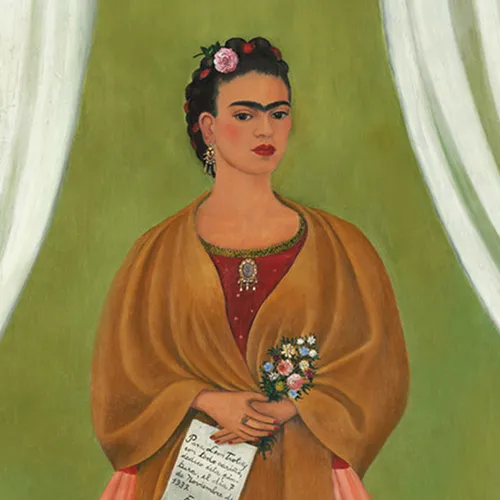
This year, to celebrate IWD, the National Museum of Women in the Arts is offering an exclusive virtual event exploring the life, art and legacy of Frida Kahlo (1907-1954), The discussion, curated by Sarah Powers of the Museum of Fine Arts, will explore Kahlo’s role in promoting Mexican and indigenous culture and her celebrated depictions of the female experience and form.
[3/8, noon-1pm, register here, free)]
 East Rock Gazette
Leave a comment